
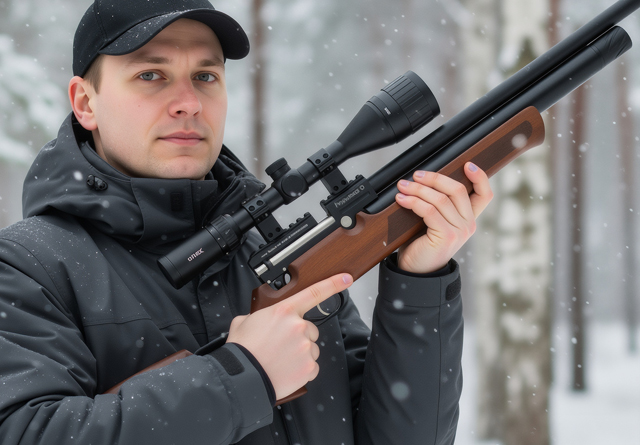
Airguns are often seen as all‑season shooting tools, but very cold weather can dramatically affect their performance, reliability, and longevity. Whether you’re hunting, target shooting, or just plinking in winter conditions, understanding how cold temperatures impact airguns is essential for safety and accuracy.
Below are the most important things every airgun owner should know when temperatures drop.
Cold Weather Reduces Airgun Power
Cold air is denser, and cold mechanical systems don’t operate as efficiently. As a result, most airguns lose velocity in cold weather.
- CO₂ airguns suffer the most. CO₂ pressure drops sharply below about 60°F (15°C).
- PCP airguns also lose some power due to lower air pressure and slower valve operation, but the effect is usually mild.
- Spring‑piston and gas‑ram airguns can lose power due to stiff lubricants and seals.
Expect lower FPS and energy output, which can affect the point of impact and effective range.
CO₂ Airguns Perform Poorly in Cold Weather
If you shoot in winter, CO₂ airguns are generally the worst choice.
- CO₂ relies on temperature to create pressure
- Below ~40°F (4°C), pressure drops dramatically
- Rapid firing causes additional cooling (“CO₂ freeze‑up”)
Symptoms include:
- Weak shots
- Inconsistent velocity
- Failure to cycle semi‑automatic actions
Recommendation: Avoid CO₂ airguns in very cold weather. Switch to PCP or spring‑powered airguns instead.
Lubricants Can Thicken or Freeze
Cold temperatures cause many standard airgun lubricants to thicken, increasing friction and wear.
This can result in:
- Sluggish triggers
- Harsh firing cycles
- Reduced velocity
- Seal damage
Best practices:
- Use cold‑weather‑rated airgun lubricants
- Avoid petroleum oils in spring‑piston guns (dieseling risk)
- Keep lubrication minimal and appropriate to your gun type
A properly lubricated airgun will cycle more smoothly and consistently in cold conditions.
Seals and O‑Rings Become Less Flexible
Airgun seals (often made of rubber or synthetic polymers) become stiffer in cold weather.
Potential problems:
- Air leaks
- Reduced efficiency
- Increased wear or cracking over time
PCP airguns rely heavily on O‑rings, so seal condition is especially important.
Tip: High‑quality silicone or polyurethane seals handle cold better than cheap rubber ones.
Accuracy Can Change in Cold Temperatures
Cold weather affects both the airgun and the shooter.
Factors that impact accuracy:
- Lower velocity changes the pellet trajectory
- Cold barrels may behave differently from warm ones
- Thicker gloves reduce trigger feel
- Cold shooters tend to tense up
What to do:
- Re‑zero your airgun in cold conditions
- Shoot slower and more deliberately
- Use consistent pellets known to perform well in your gun
Moisture and Condensation Are Real Risks
Bringing a cold airgun into a warm environment causes condensation to form on metal parts.
This can lead to:
- Rust
- Corrosion inside barrels
- Moisture inside PCP air reservoirs
Prevention tips:
- Leave your airgun in a case until it warms up gradually
- Wipe down metal parts after shooting
- Store airguns in a dry environment with desiccants
PCP Airguns Are the Best Choice for Cold Weather
When temperatures drop, PCP airguns generally perform the best.
Advantages:
- Minimal power loss compared to CO₂
- No temperature‑dependent gas expansion
- Consistent shot‑to‑shot performance
However:
- Fill pressure may appear lower in cold weather
- Hand pumps are harder to use in freezing temperatures
Keep your air supply dry and your seals well‑maintained.
Battery‑Powered Accessories Drain Faster
If you use:
- Red dots
- Illuminated scopes
- Chronographs
- Rangefinders
Cold weather will significantly reduce battery life.
Carry spare batteries and keep electronics warm until use.
Storage Matters More in Winter
Never leave your airgun:
- In a freezing vehicle
- In damp sheds
- Exposed to rapid temperature changes
Best storage conditions:
- Cool but dry
- Stable temperature
- Protected from moisture
Proper storage prevents seal damage, rust, and long‑term reliability issues.
Final Thoughts
Shooting airguns in very cold weather is absolutely possible – but it requires the right equipment, proper maintenance, and realistic expectations.
Quick Summary:
- Avoid CO₂ airguns in cold weather
- PCPs and springers perform best
- Use cold‑rated lubricants
- Expect reduced velocity and re‑zero
- Protect seals, batteries, and metal parts
Understanding these factors will help you shoot safely, accurately, and reliably all winter long.
About Just Air Guns
We Were the First to Offer Home Delivery of Airguns in The Uk, and Today, We Have the Largest Number of Our Own Drivers and Vans on The Road Delivering to Your Door Seven Days a Week. Simply Place Items Into the Cart to see the Actual Delivery Price You Will Pay to have the Latest Air Guns delivered to you. if You Have Any Questions About Our Airguns Delivery Service, don’t hesitate to get in Touch with Us via This Website or Call Us on 0330 999 5224.
Blog Title: Airguns in Very Cold Weather
Author: Mark Watts
Shop Address: Just Air Guns, Trimex House, Pier Road, Feltham, TW14 0TW
Website: www.justairguns.co.uk
Phone: 0330 999 5224